Scar removal for chickenpox at Rodam Korean Medicine Clinic with Coratherapy.
Hello, this is Rodam Korean Medicine Clinic, the beginning of Coratherapy for scar removal.
Chickenpox, a common contagious disease in childhood, is often accompanied by severe itching,
making it difficult to resist scratching the affected area.
As a result, permanent indented scars may remain, especially in areas of the face
such as the forehead, eyebrows, and the glabella, which are focal points of attention,
causing significant concern about appearance.
Even trying to cover these scars with makeup can sometimes make them more noticeable,
as makeup may settle into the scars.
This leads many people to seek treatment options.
However, many worry whether old scars can actually be improved.
Today, to ease such concerns, we will introduce Coratherapy, known to be effective even for old scars,
and explain its principles and effects through real-life cases.
Case :: Round scar caused by chickenpox
History :: No prior treatment experience
Report :: 7 sessions of Coratherapy conducted
The patient introduced today is a male in his 20s who had a scar near his right eye
due to chickenpox experienced during childhood.
Chickenpox scars are often old scars,
and this patient also thought that treatment would be impossible due to the long duration of the scar,
so he had not attempted any other procedures before.
However, he came across Rodam Korean Medicine Clinic’s Coratherapy and decided to visit.
Are chickenpox scars truly difficult to treat? To answer this question,
chickenpox scars often have relatively consistent shapes and clear boundaries,
making them respond well to treatment.
In this patient’s case as well, very positive changes were observed during the treatment process.
We will now explain the changes observed in each session and the approach taken,
along with photos taken after the treatment.
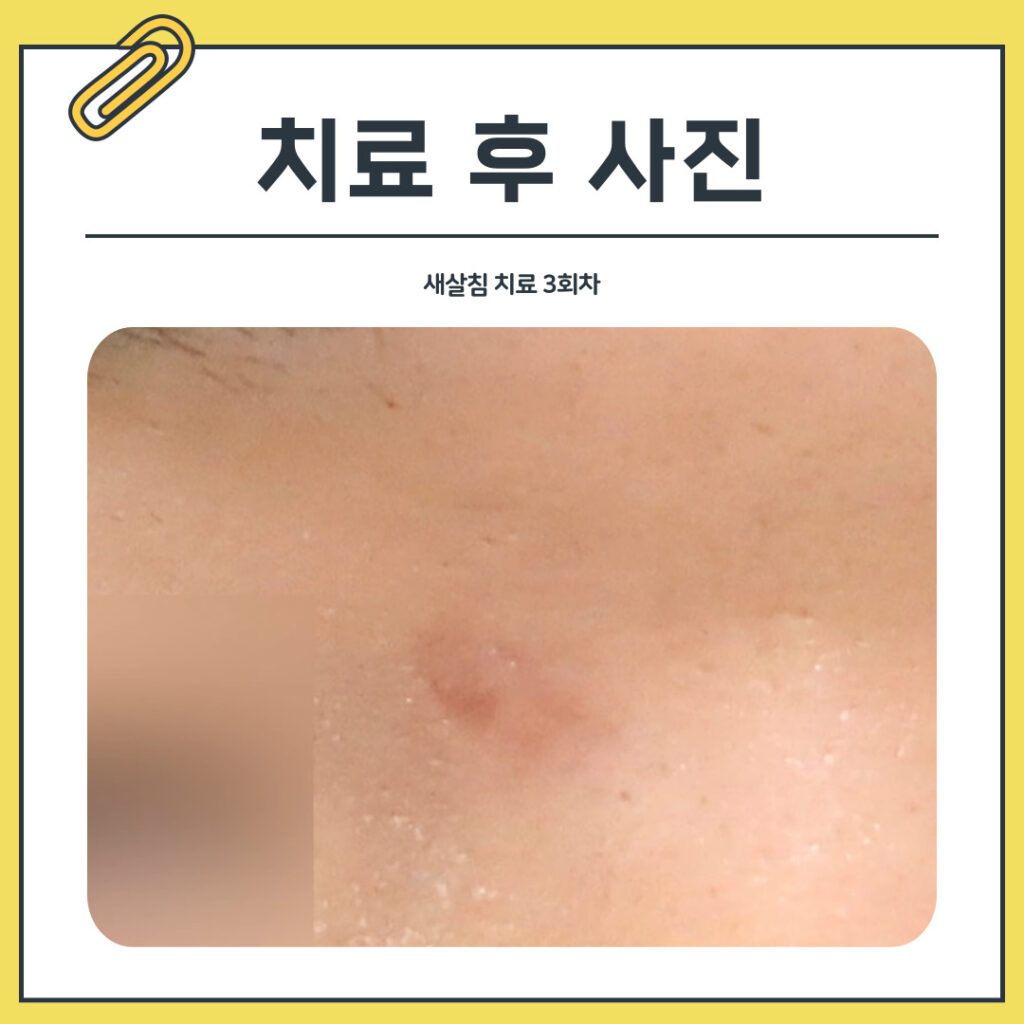
After the third session,
you can see that the inside of the scar has started to fill in, and the boundaries have blurred.
Although the outer edges still show boundaries and indentations,
significant recovery was observed even after just three sessions.
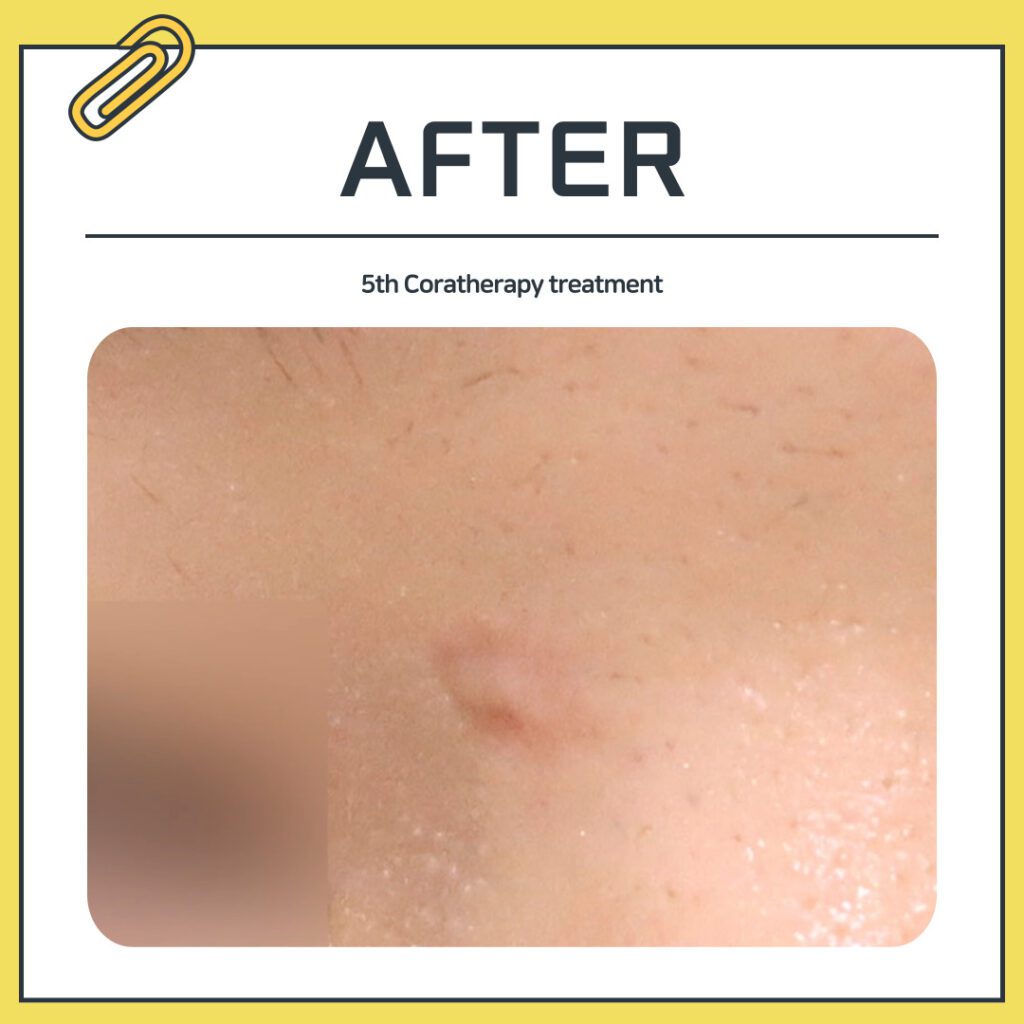
By the fifth session, you can see that the center of the scar has filled in significantly,
and the boundaries on the inside and upper parts have blurred considerably.
Therefore, if the outer C-shaped indentation is resolved,
it was expected that the scar could be completely healed.
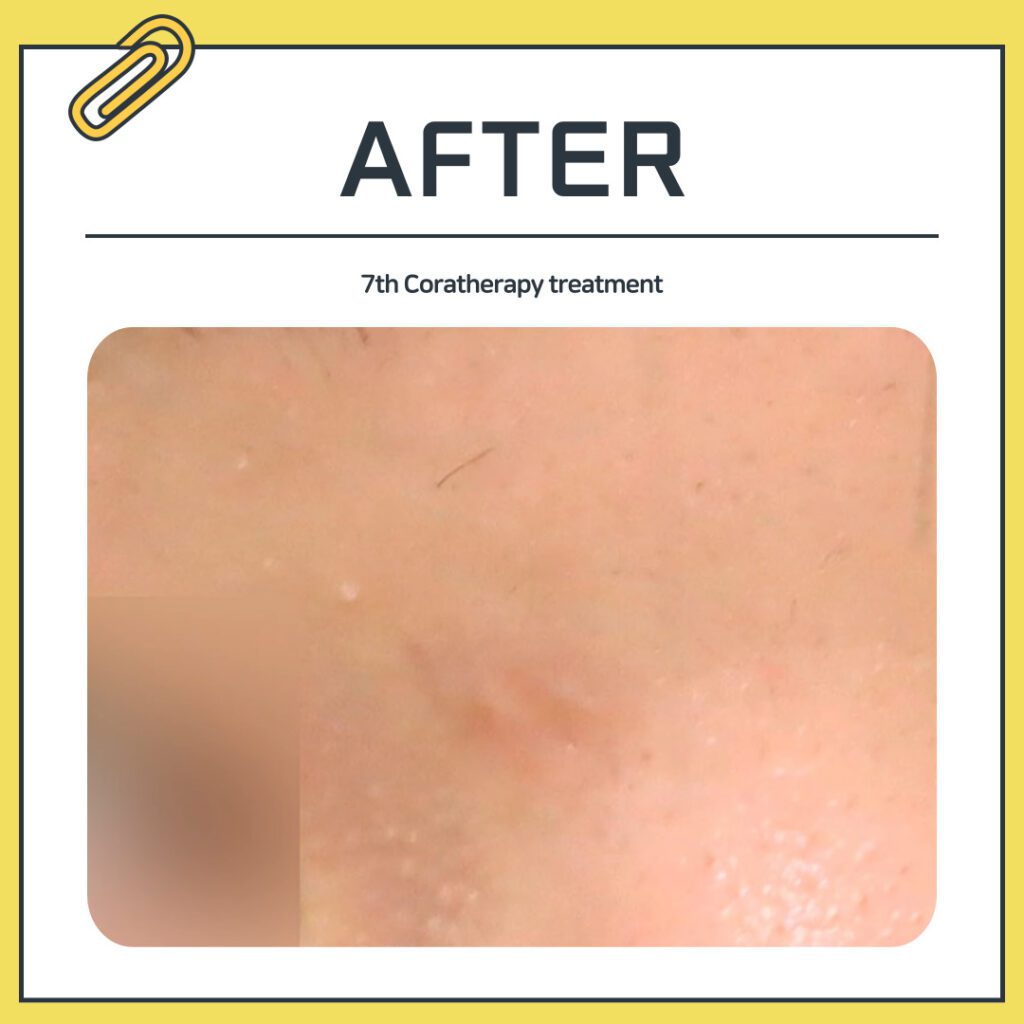
After the final seventh session,
the depth of the scar had significantly reduced, and the scar had become much less noticeable.
Particularly, the C-shaped outer indentation visible up to the fifth session had almost disappeared,
blending seamlessly with the surrounding normal skin.
The slight remaining indentation is expected to fill in gradually as the redness subsides,
so the treatment was concluded after seven sessions.
How is it possible to recover even from old chickenpox scars like this?
The answer lies in the principles of Coratherapy.

Rodam Korean Medicine Clinic’s Coratherapy has been practiced since 2006 as a treatment for indented scars.
It activates the skin’s natural regenerative ability to help new skin fill in the scars.
During the procedure, specially designed needles are used to release adhered tissues
and stimulate the dermis layer to induce the filling of regenerative substances in the scar area.
This process allows the skin to heal itself, and the treated scars do not sink back in, which is a significant advantage.
Since this procedure relies on the skin’s regenerative power, it is not significantly affected by the cause, shape,
or duration of the scar, which is another major benefit.
Scars are not just an external issue but can also cause psychological stress.
Especially for scars in prominent areas like the face, they can be even more concerning.
However, even old scars can be significantly improved with appropriate treatment,
so if you ever want to address your scar concerns, please visit Rodam Korean Medicine Clinic.
Rodam Korean Medicine Clinic is always here for you. Thank you.