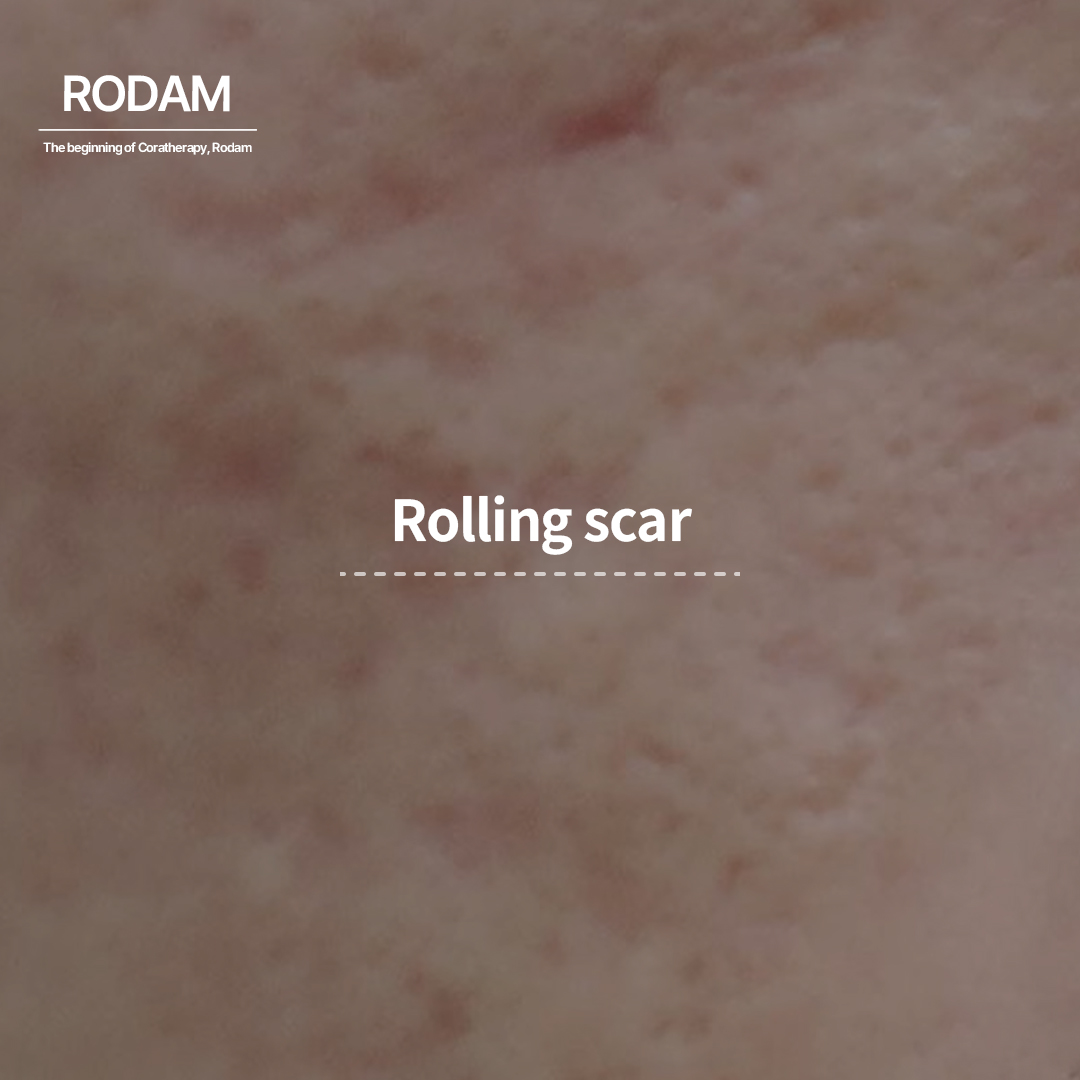
Rolling scars refer to pitted acne scars treatment, Coratherapy at Rodam Korean Medicine Clinic.
Hello, this is Rodam Korean Medicine Clinic, the beginning of Coratherapy for scar removal.
Acne is not just a simple skin trouble; it leaves marks over time, causing additional concerns.
In particular, rolling scars disrupt the smooth surface of the skin, interfering with natural light reflection and even expressions.
This discomfort, which only you may notice, can grow when taking photos or having close conversations,
lowering your confidence in daily life.
As such, acne scars are not merely an appearance issue but can also affect social relationships and psychological stability.
Among the various types, rolling scars are widespread, requiring a more meticulous approach during treatment.
Today, we will examine the causes and characteristics of these rolling scars and discuss in detail the Coratherapy treatment method
that helps restore your skin to its natural state.
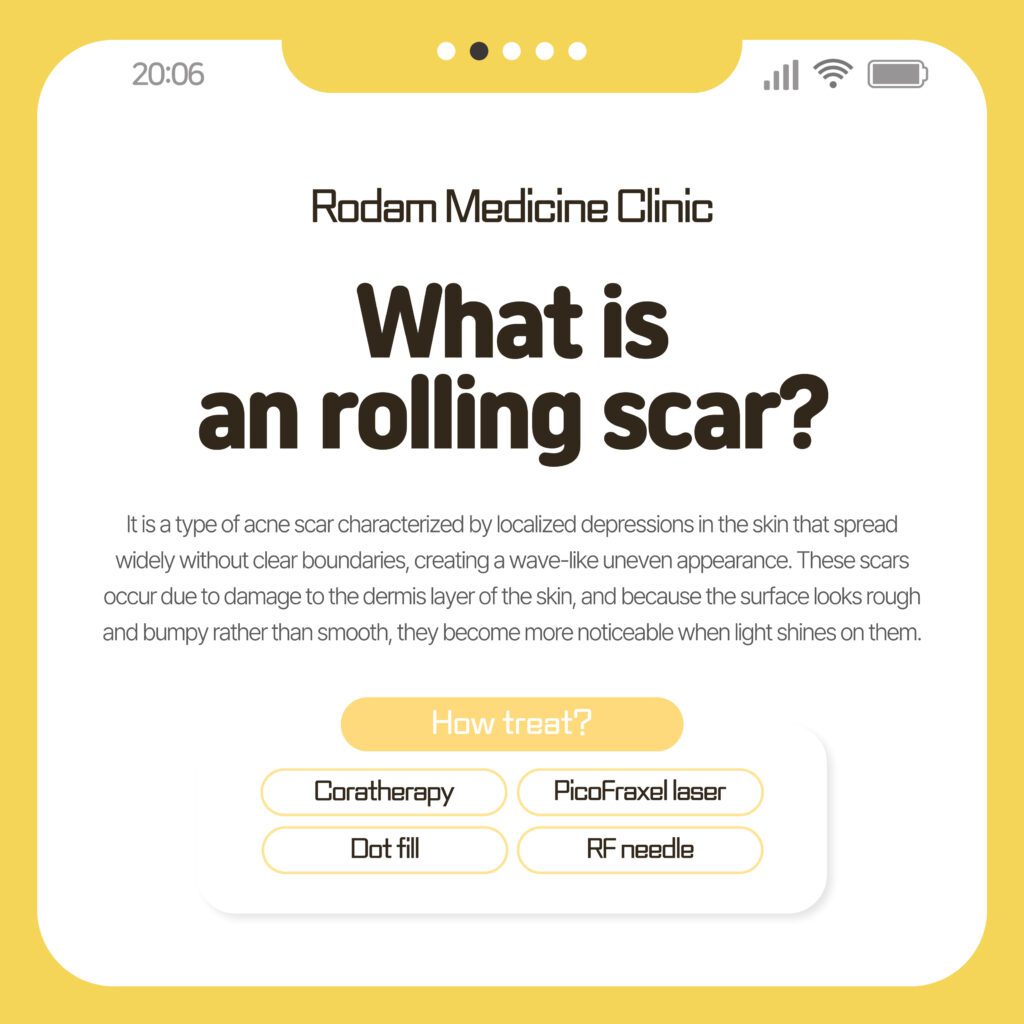
Rolling scars occur as a result of the complex healing process within the skin.
When acne becomes severe and the inflammation spreads deep into the dermis layer, the skin gets damaged,
making normal regeneration difficult.
To repair the damaged area, the skin produces collagen,
but if the collagen is not evenly distributed or the recovery is incomplete
while the epidermis heals, it leaves a sunken mark on the skin.
Additionally, fibrosis occurs in the dermis layer,
where fibrous tissue clumps together and pulls on the skin, causing the surface to become uneven.
Rolling scars, in particular, result from this fibrosis occurring over a wide area,
leaving the overall skin texture uneven.
Compared to other types of scars, rolling scars cause relatively less damage to the skin’s surface,
but excessive fibrous tissue formation in the dermis layer
reduces skin elasticity and disrupts blood flow, making the surface appear more sunken.
These scars are not deeply indented but have indistinct edges and
spread widely, making the treatment process more challenging.
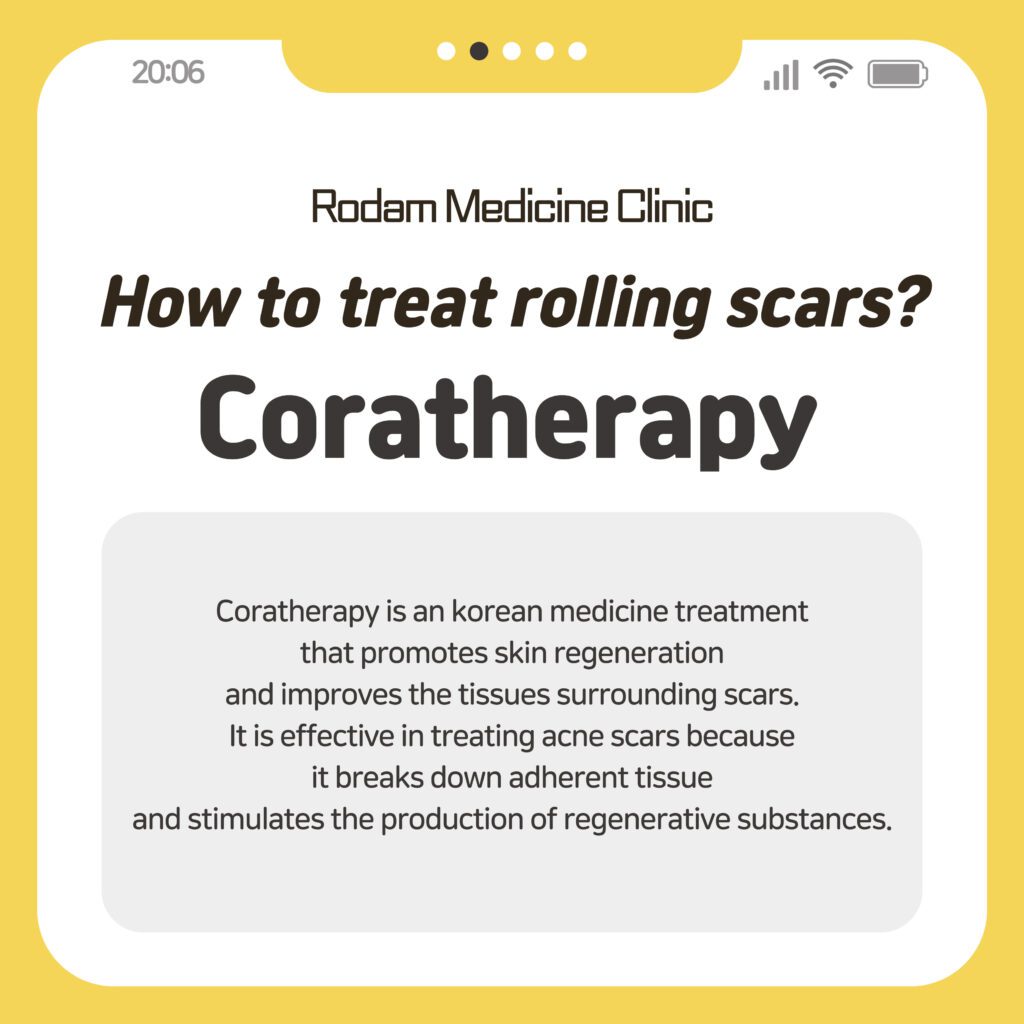
However, this does not mean that rolling scars are untreatable.
Rolling scars are generally treated through three stages.
The first stage is adhesion tissue release.
This process involves cutting the fibrous adhesions pulling on the scarred area, allowing the skin to move freely.
The second stage is collagen regeneration stimulation.
By stimulating the damaged dermis layer, new collagen production is induced, helping the sunken skin to fill in.
The third stage is dermis layer strengthening.
This process reinforces the skin’s internal structure, ensuring that the newly generated tissue settles stably,
preventing the scar from sinking again.
Typically, different treatments are required for each stage,
but the treatment method that integrates these three stages is Coratherapy.
Rodam Korean Medicine Clinic has been performing Coratherapy since 2006.
Coratherapy uses specially designed needles,
which simultaneously release adhesions and stimulate the dermis to encourage the filling of regenerative substances, making it an effective treatment for sunken scars.
Unlike simple straight needles, the ‘L’-shaped incision needles used in this treatment
allow for precise stimulation, sculpting the scar with great detail.
As a result, the treatment progresses in a way that blends more naturally with the surrounding healthy skin,
and since the dermis itself regenerates, the scar does not sink again, which is a significant advantage.
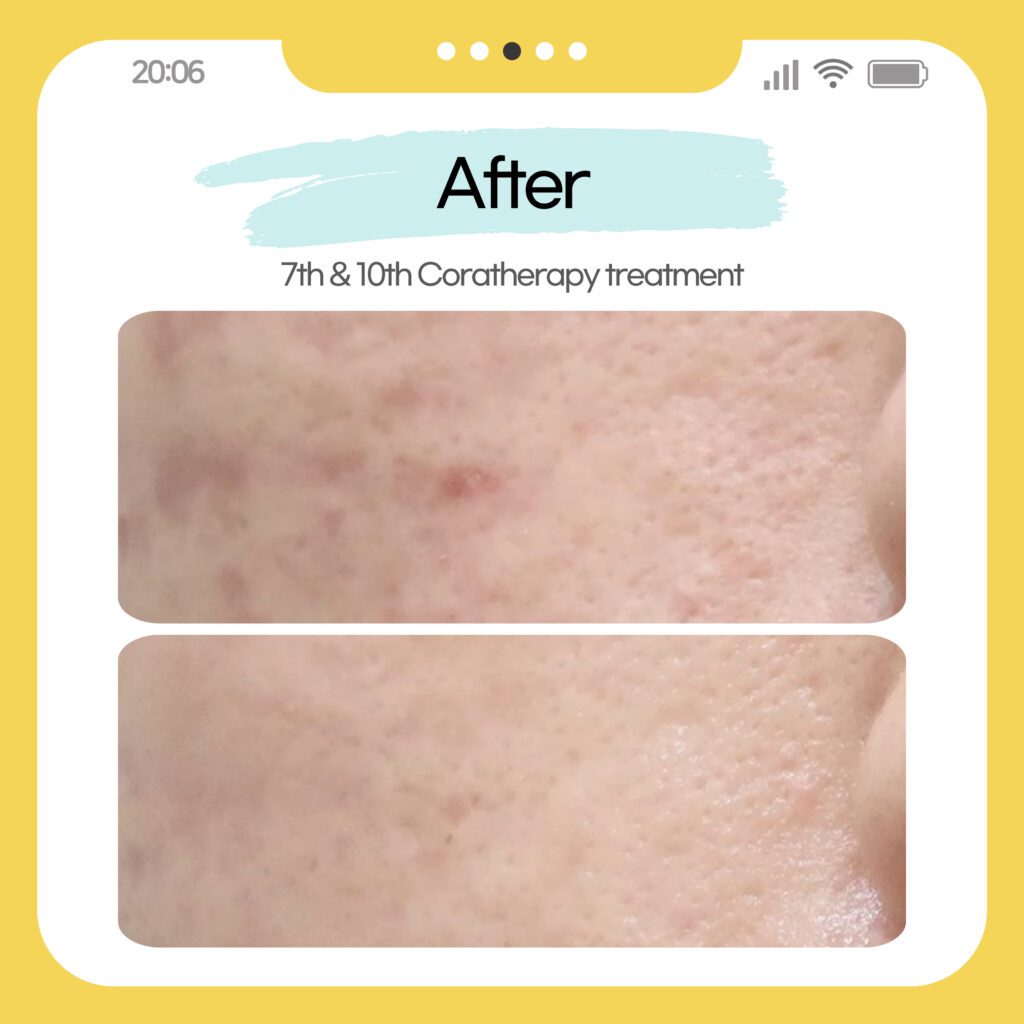
Post-treatment photos clearly demonstrate these results.
Particularly after 10 sessions, the uneven texture of the skin was significantly reduced,
and a smooth skin texture was visible even under natural light or artificial lighting.
As mentioned so far, rolling scars can be sufficiently improved,
and Coratherapy is proven to be a highly effective treatment method in this process.
However, Coratherapy requires the delicate skills and experience of a Doctor to achieve the desired results,
so it is crucial to receive treatment from a skilled professional.
Rodam Korean Medicine Clinic has been focusing on treating sunken scars for the past 20 years,
and we sincerely listen to your skin concerns.
We will continue to stand by your side for your scar treatment. Thank you.