
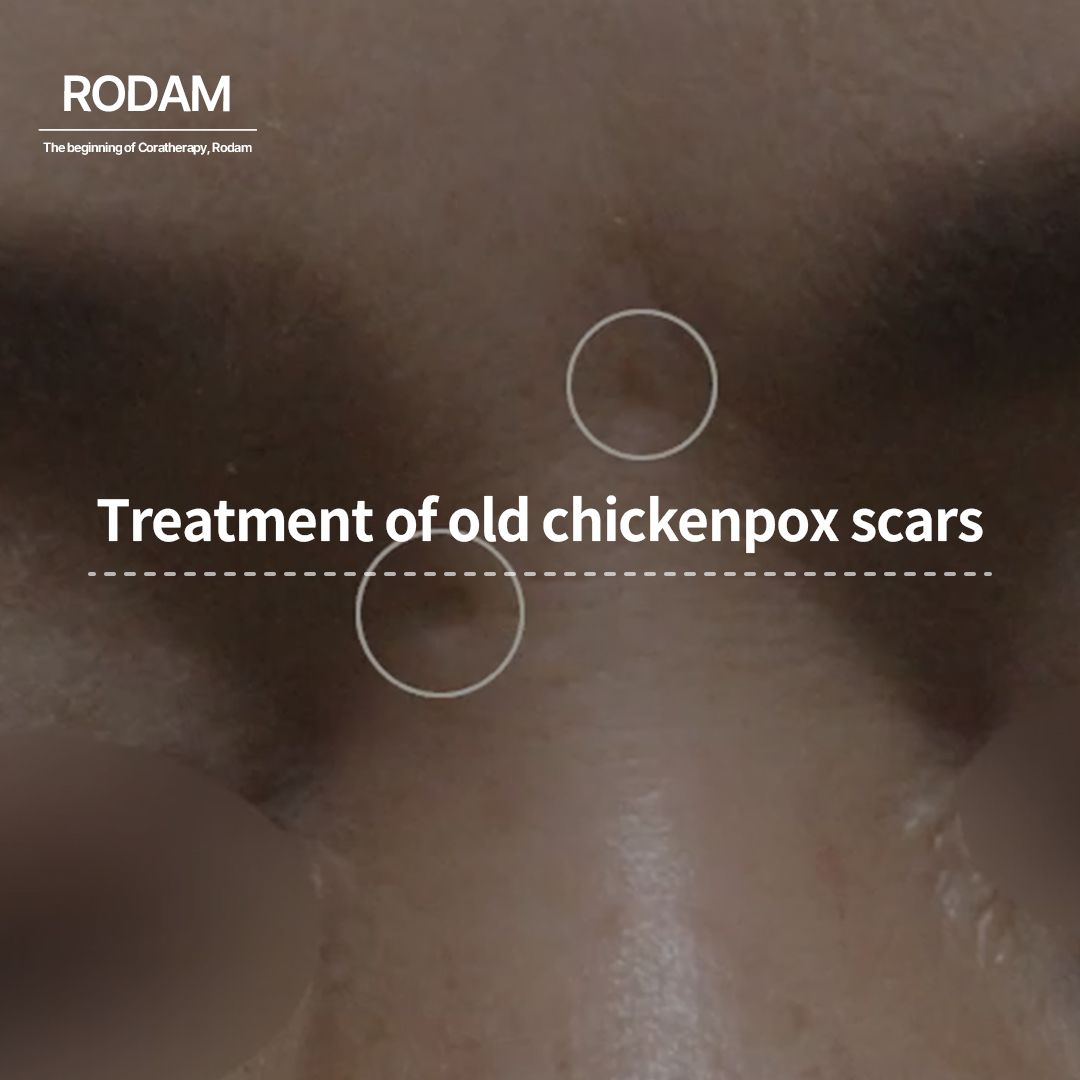
Removal of old chickenpox scars with Coratherapy at Rodam Korean Medicine Clinic
Hello, this is Rodam Korean Medicine Clinic, the beginning of Coratherapy for scar removal.
Chickenpox, a contagious disease that many people experience during childhood,
is accompanied by intense itching, making it difficult to avoid touching the affected area.
As a result, permanent scars may remain on the face,
and scars in highly visible areas such as the forehead, eyebrows, or between the eyes can cause significant stress.
Even with makeup, scars can trap foundation, making them appear more pronounced,
leading many to consider scar treatment.
However, some people worry about whether treatment is possible for old scars.
Today, to alleviate such concerns, we will discuss Coratherapy, known to be effective even for old scars,
and explain its effects and principles through real-life cases.
Causes and Characteristics of Chickenpox

First, let’s look at the causes and characteristics of chickenpox.
Chickenpox is a highly contagious disease caused by the Varicella-Zoster Virus (VZV),
which spreads easily through airborne droplets or direct contact between individuals.
It is more likely to occur in people with weakened immune systems,
particularly children whose immune systems are not yet fully developed.
However, it does not mean that adults are immune to chickenpox.
In fact, when adults contract chickenpox, the symptoms are often more severe than in children.
Therefore, it is essential to be cautious if you have not been vaccinated or have never had chickenpox before.
While chickenpox is a disease that usually resolves naturally,
as mentioned earlier, scratching the blisters due to severe itching can lead to scars.
Chickenpox scars often remain as depressed scars because the dermis does not heal sufficiently during rapid skin recovery.
These atrophic scars are challenging to improve naturally over time, requiring professional treatment.
One such treatment is Coratherapy, a Korean Medicine scar treatment method,
and its effectiveness can be confirmed through real-life cases.
Real Case
Case :: Female in her 50s, chickenpox scars on the glabella and below the eyebrows, over 30 years old
History :: No prior treatment experience
Report :: Underwent 6 sessions of Coratherapy
Today’s case involves a patient with a scar on her glabella caused by chickenpox over 30 years ago.
Chickenpox scars are often old,
and this patient also believed that treatment was impossible due to the long-standing nature of her scars,
so she had not attempted any other treatments before.
She later learned about Rodam Korean Medicine Clinic’s Coratherapy by chance and decided to visit us.
So, is it difficult to treat chickenpox scars?
To answer this question directly,
chickenpox scars often have clear boundaries and a consistent base, making treatment outcomes relatively favorable.
In this patient’s case, the treatment results were also very positive,
and we will explain the progress and treatment direction in detail with photos taken after each session.
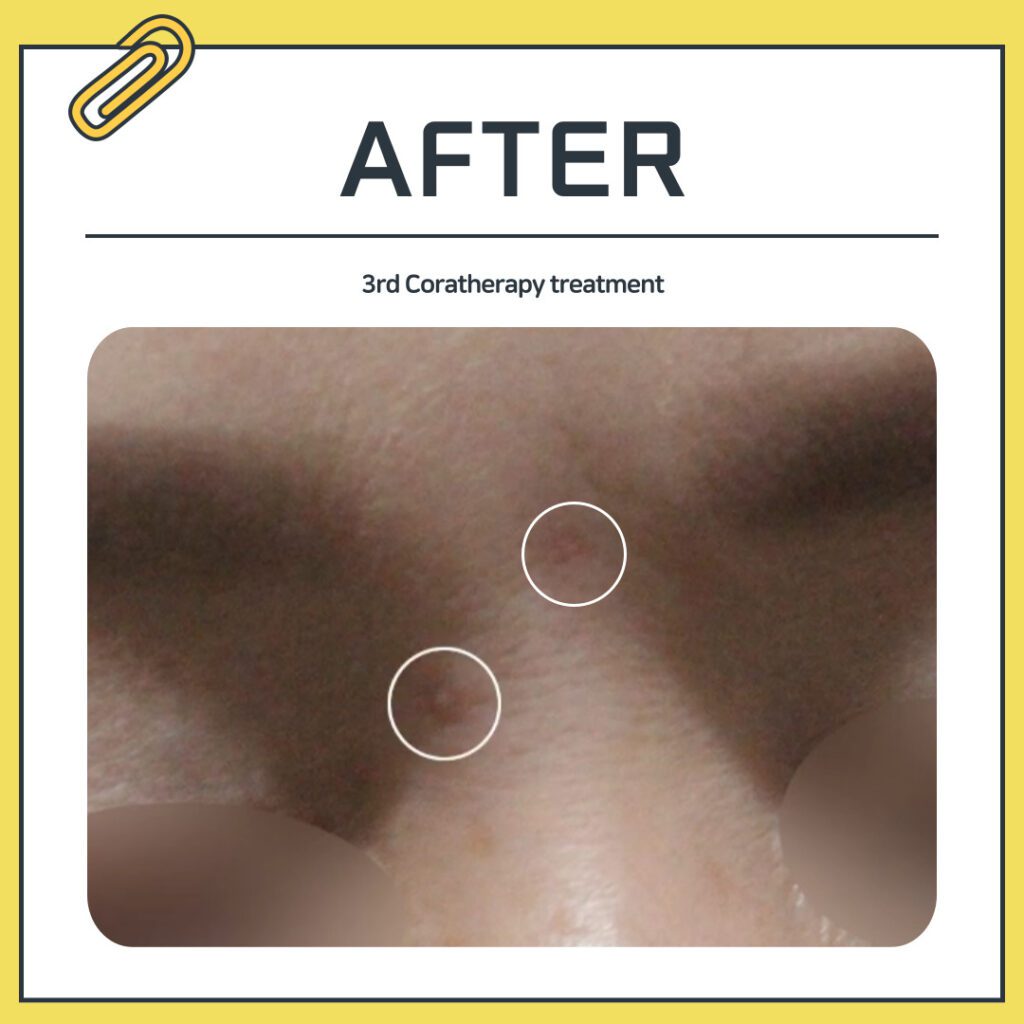
After the third session, the scar between the eyebrows, which was relatively shallow,
had significantly improved, with almost no visible boundary between the scar and the surrounding skin.
In contrast, the scar below the eyebrow, which had a clear and deep boundary,
showed signs of improvement starting from the center.
Due to the hard edges of the scar, the regeneration of the scar edges was slower, making them appear more pronounced,
while the center appeared slightly raised.
Considering these characteristics, the subsequent sessions focused on evenly filling the edges of the scar below the eyebrow.
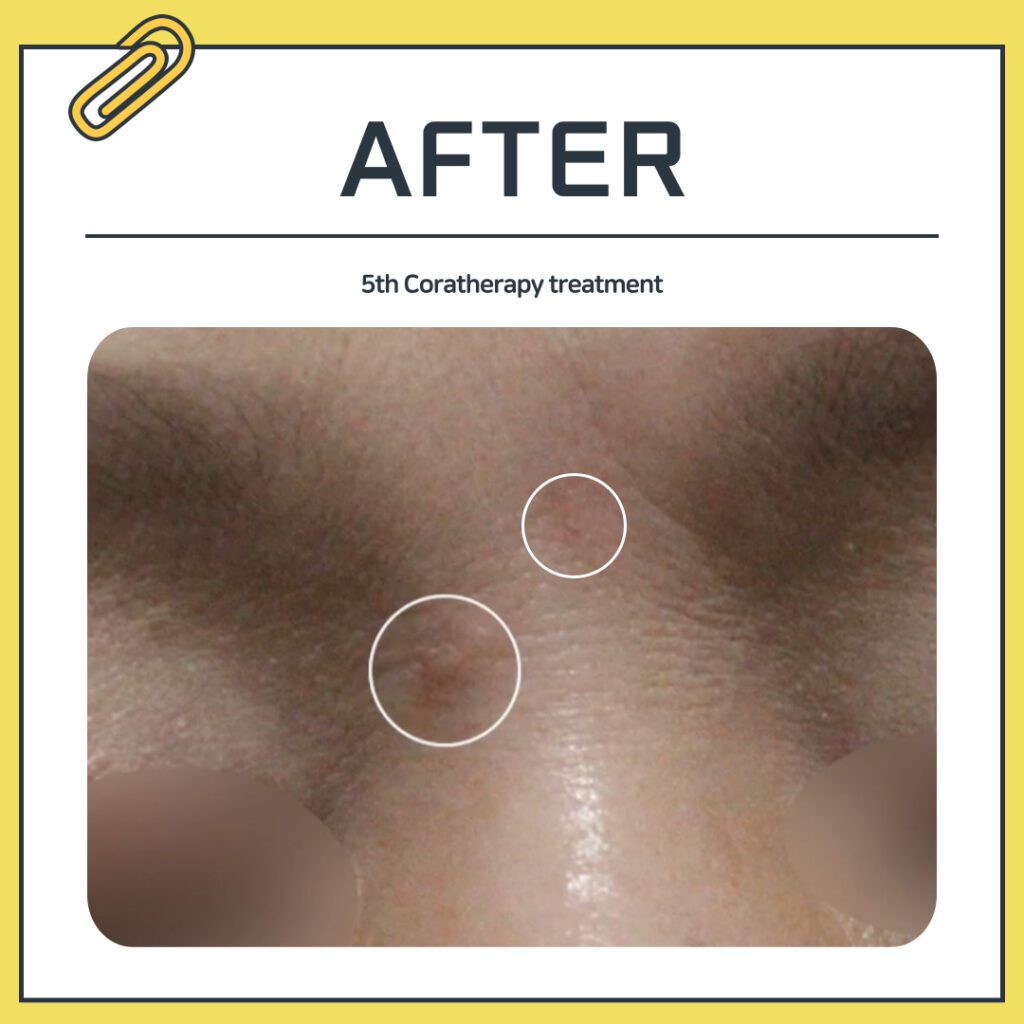
After the fifth session, the scar on the glabella had improved to the point where it was almost indistinguishable from the surrounding skin,
with only slight redness remaining.
The scar below the eyebrow, which had been the focus of treatment,
also showed significant improvement, with the edges well-filled.
However, the central area was still slightly raised, making the surface uneven.
During the sixth and final session, we incorporated a “refinement procedure”
to address these areas and further enhance the results.
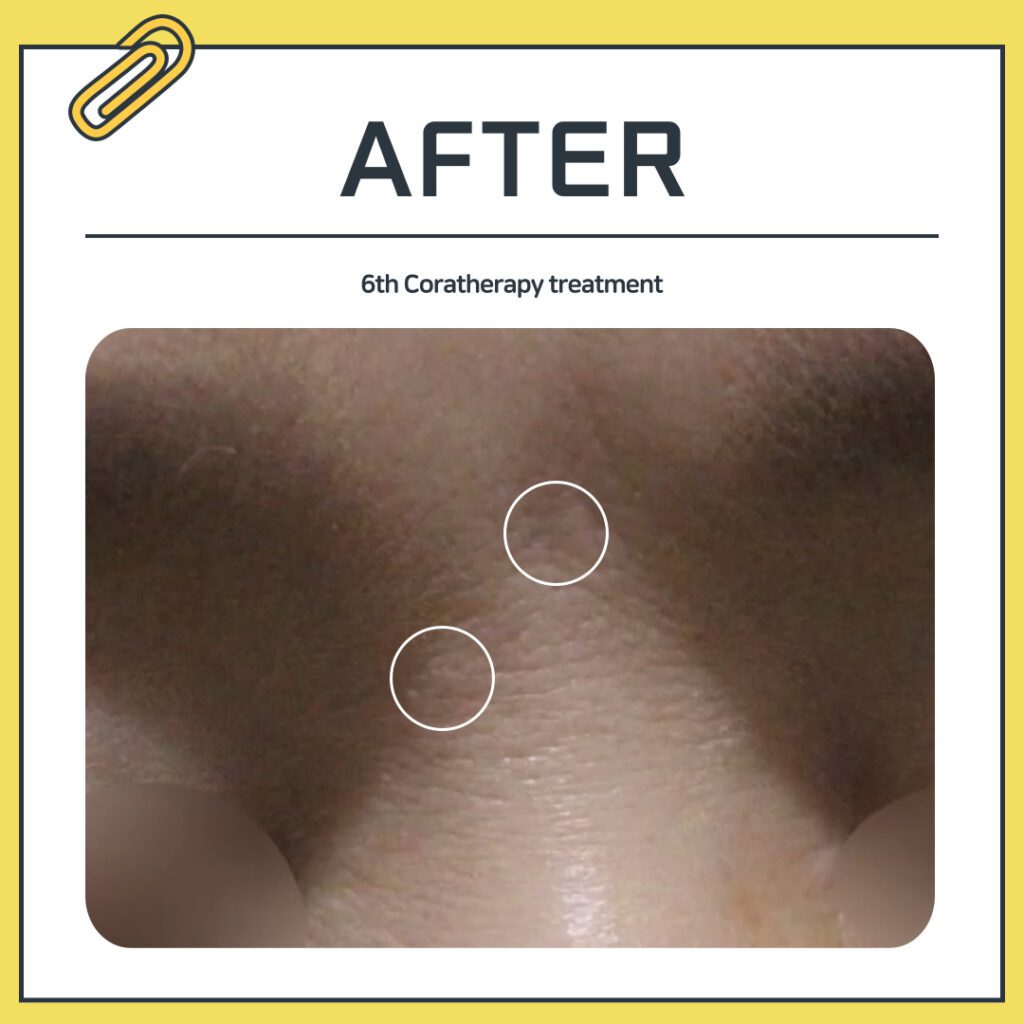
Four months after the sixth and final session,
both scars had completely lost their redness,
and the surfaces of the scars had become smooth.
The patient was very satisfied with the results, as the scars she had struggled with for so long had disappeared.

So, why was it possible to treat such old scars?
The answer lies in the treatment principle of Coratherapy.
Rodam Korean Medicine Clinic’s Coratherapy is a treatment method for atrophic scars that began in 2006,
which activates the skin’s natural regenerative power to promote the growth of new tissue.
Using specially designed needles, Coratherapy breaks down adhesions and stimulates the dermis,
encouraging the regeneration of the depressed scar area.
This process allows the skin to regenerate.
One of the advantages of treating scars with Coratherapy is that the improved scars do not sink back over time.
Scars are not just a cosmetic issue but can also significantly impact psychological well-being.
Scars in visible areas, such as the face, can be particularly bothersome.
However, even old scars can be improved with proper treatment,
so we encourage you not to worry alone and to consult with a specialist.
If you wish to address your scar concerns, please visit Rodam Korean Medicine Clinic.
We are always here to help you. Thank you.