How to manage scars after Coratherapy treatment for pitted scars? Rodam Korean Medicine Clinic will let you know!
Hello, this is Rodam Korean Medicine Clinic, the beginning of Coratherapy for scar removal.
Coratherapy, a treatment sought by many for improving pitted scars, is known as an effective method to promote skin regeneration.
However, like all treatments, Coratherapy also involves a certain downtime after the procedure.
In particular, redness remains immediately after the procedure,
which generally fades naturally within 1-2 weeks, but some people wish for a faster recovery.
Additionally, there are not only those who want to quickly reduce redness,
but also many who want to maximize the effects of the treatment to enhance skin regeneration as much as possible.
Therefore, today, we would like to provide detailed information on post-treatment care for Coratherapy for those who are interested.
What is Coratherapy?

To briefly explain Coratherapy,
it is a Korean Medicine treatment that promotes skin regeneration.
By using specialized needles, it breaks down the adhered tissues beneath the skin,
creating space for new skin to naturally regenerate.
It activates regenerative substances, guiding damaged skin to heal.
Since Coratherapy physically stimulates the skin,
it is natural for redness to remain in the treated area after the procedure.
This redness, as mentioned earlier, usually fades over 1-2 weeks,
but for those who wish to improve it more quickly, the following methods can be helpful.
Key Tips for Managing Redness
The redness visible after Coratherapy is a natural part of the healing process,
caused by blood gathering in the treated area.
It is not a side effect but a normal regenerative process.
However, for those who wish for the redness to fade more quickly,
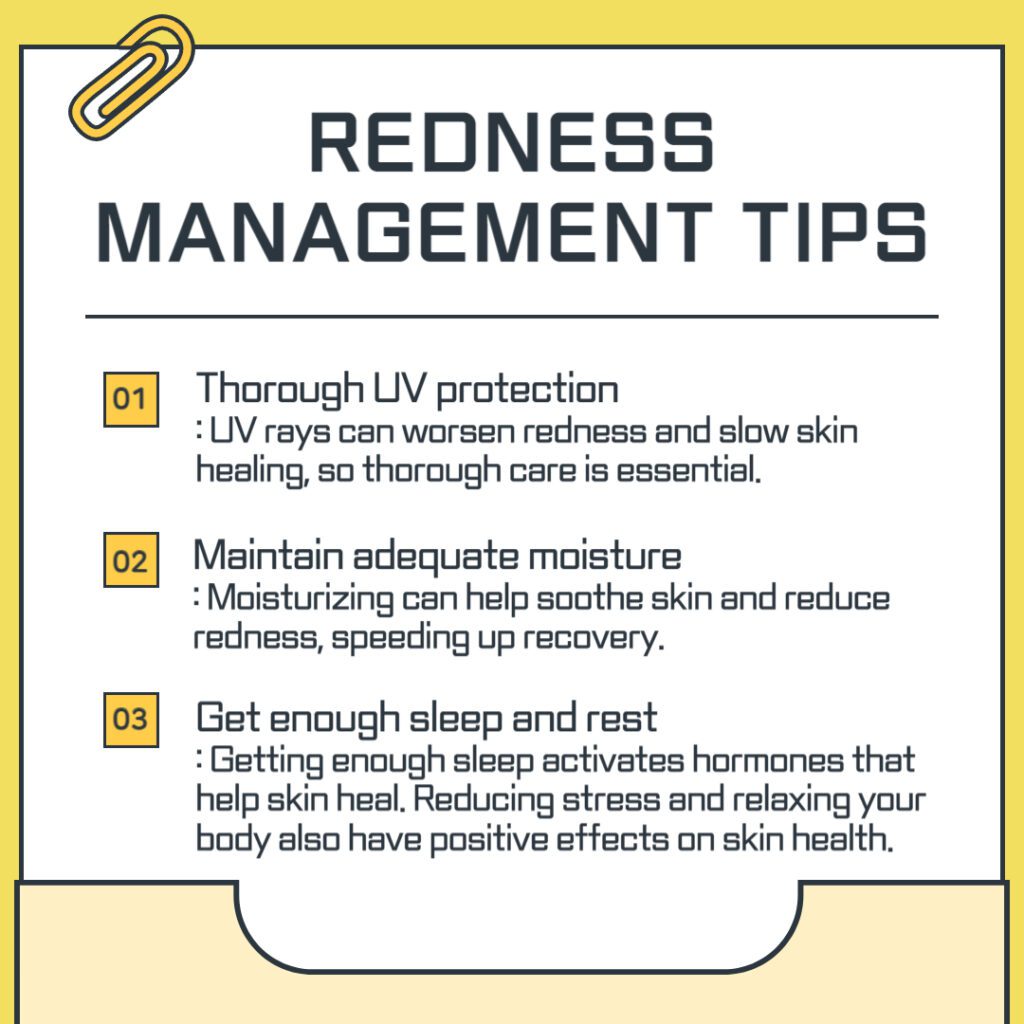
we recommend the following three management tips.
- Thorough Sun Protection: After the procedure, the skin becomes more sensitive to UV rays, so it is essential to apply sunscreen carefully when going outside. During peak sunlight hours, use hats or parasols for additional protection. UV rays can worsen redness and slow down skin recovery, so diligent management is necessary.
- Maintain Adequate Moisture: After the procedure, the skin can easily become dry, so apply a regenerative cream 2-3 times a day to provide sufficient hydration. Moisturizing helps soothe the skin and reduce redness. Consistent care to prevent dryness is key to speeding up recovery.
- Adequate Sleep and Rest: Proper rest is essential for skin regeneration. Maintaining a regular sleep pattern and getting enough sleep activates hormones that aid in skin recovery, creating an environment for the skin to heal itself. Reducing stress and keeping the body relaxed also positively impact skin health.
By practicing these three management tips, you can effectively reduce redness after the procedure
and help your skin recover healthily.
Management Practices to Avoid
While proper care is important,
it is equally crucial to avoid factors that can hinder recovery when the skin is sensitive after Coratherapy.
In particular,
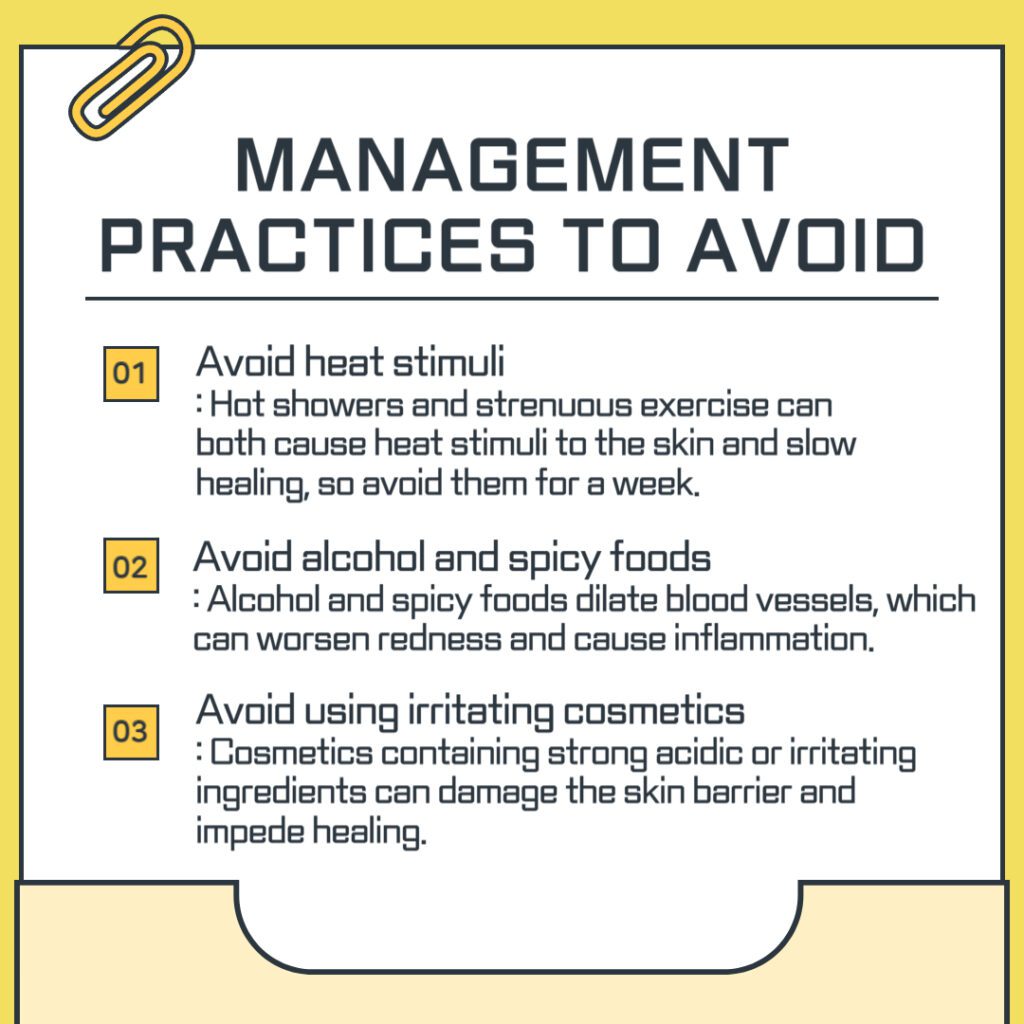
- Avoid Heat Stimulation: Hot showers, saunas, and intense exercise can all stimulate the skin with heat, delaying recovery. Avoid such activities for at least a week after the procedure to allow the skin to recover stably.
- Refrain from Alcohol and Spicy Foods: Alcohol and spicy foods can dilate blood vessels, worsening redness and causing inflammation. Since the skin is sensitive after the procedure, it is best to avoid these for a while.
- Avoid Using Irritating Skincare Products: Products containing strong acidic ingredients (AHA, BHA) or harsh substances (such as retinol) can damage the skin barrier and hinder recovery. After the procedure, use gentle products to protect the skin safely.
By avoiding these three practices, you can help your skin recover more healthily and quickly.
Regenerative Cream
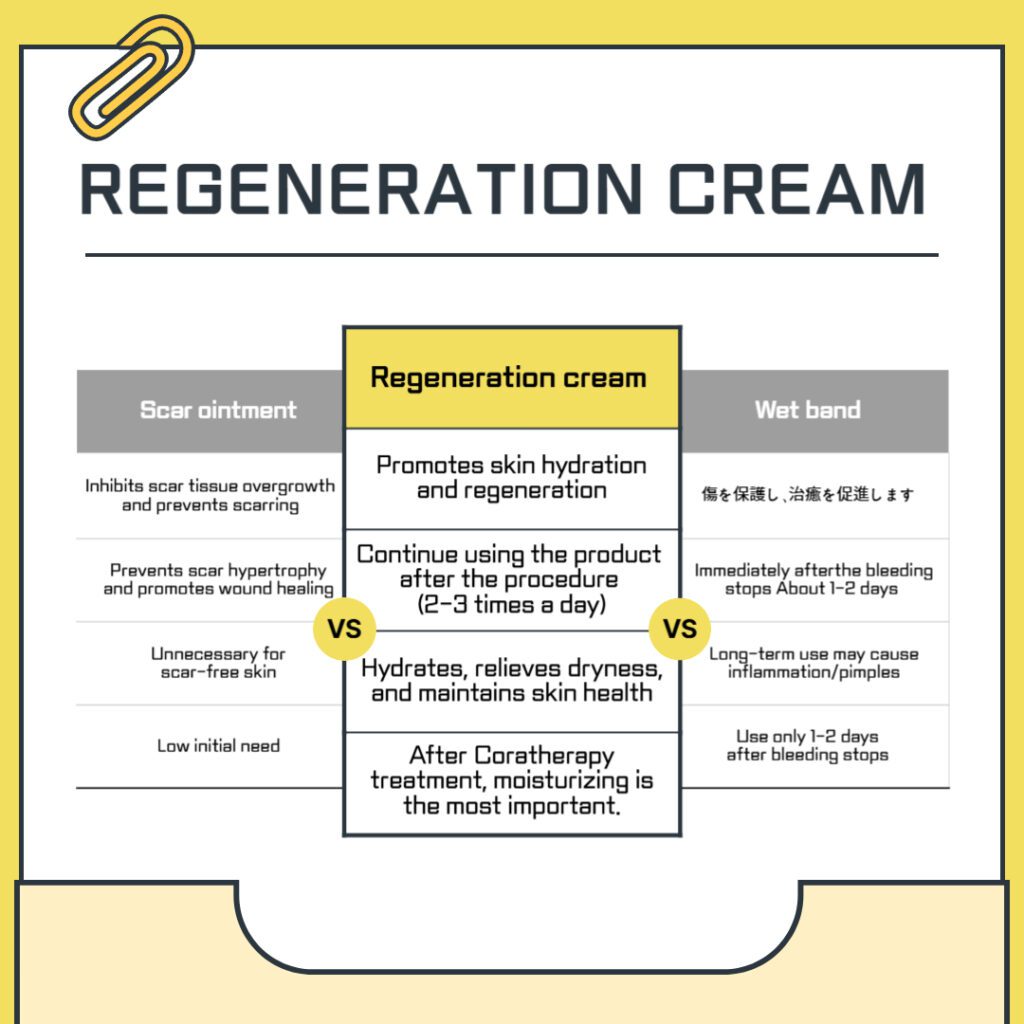
At Rodam, we particularly recommend frequently applying regenerative cream for faster recovery.
Many people ask if they can use scar ointments or hydrocolloid bandages (like Medifoam) instead.
The reason we recommend regenerative cream over scar ointments or hydrocolloid bandages is
because it focuses on “regeneration.”
Scar ointments are designed to suppress excessive growth of scar tissue and prevent scars from becoming hypertrophic.
Thus, their necessity is lower when used after treatments aimed at removing scars.
Hydrocolloid bandages physically protect the wound and promote recovery,
but prolonged use can block oxygen supply, leading to inflammation or pimples.
Since Coratherapy stimulates the dermis rather than the skin surface,
it is advisable to remove hydrocolloid bandages after the initial 1-2 days when bleeding stops.
On the other hand, regenerative creams focus on providing moisture to the skin, maintaining hydration, and promoting skin regeneration.
They are effective in relieving dryness and maintaining skin health after the procedure, and consistent application greatly aids in skin recovery.
Therefore, after Coratherapy, to enhance the skin’s natural recovery ability
and maximize the effects of the procedure, moisture management is key.
Using regenerative cream is the most suitable management method compared to scar ointments or hydrocolloid bandages.
Today, we have discussed post-treatment care for Coratherapy.
Proper care after the procedure is essential to maximize its effects
and maintain skin health.
By following the above care tips and precautions, and managing consistently, you can experience
more dramatic results.
If you have any additional questions or need consultation, please feel free to contact Rodam Korean Medicine Clinic. Thank you.