Difference between Coratherapy and Subcision: Acne Scar Treatment Cases at Rodam Korean Medicine Clinic
Hello, this is Rodam Korean Medicine Clinic, the beginning of Coratherapy for scar removal.
If you are looking for a treatment for acne scars, you may find it difficult to decide as there are so many different methods available.
If you have visited a general dermatology clinic, you might have heard about subcision.
If you have visited a scar-specialized Korean Medicine Clinic like ours, you might have heard a lot about Coratherapy.
Today, we will explain the differences between Coratherapy and subcision, and provide detailed information about the Coratherapy treatment method through actual cases.
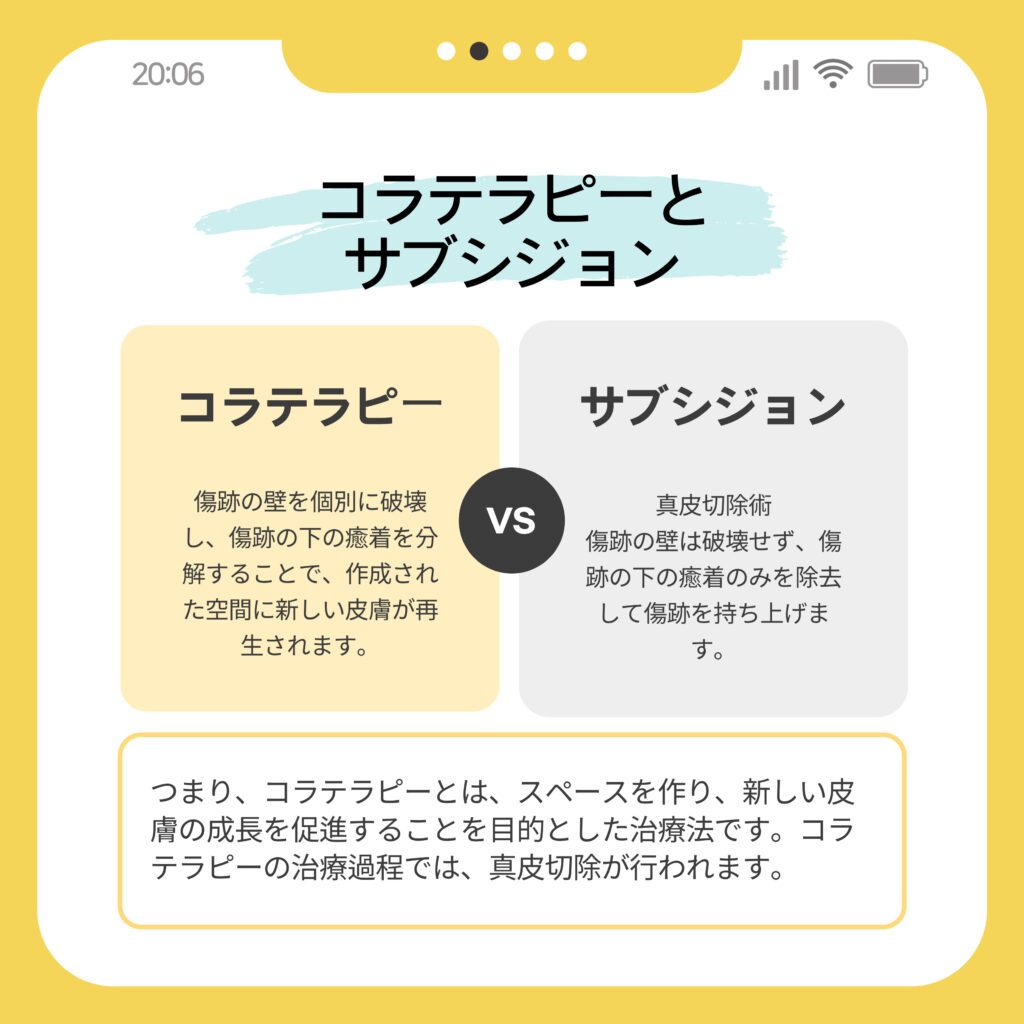
Subcision is a procedure known as dermal excision in Korean.
It involves cutting the fibrous tissue in the dermis layer beneath the scar to lift the skin.
In simpler terms, it is a treatment that strongly stimulates a wide area to break adhesions.
On the other hand, Coratherapy has a different purpose.
It creates a ‘space’ under the skin where new tissue can grow.
Using a thin, specially designed incision needle, it delicately carves out the depressed scar area to create space,
and encourages the natural filling of this space with new tissue.
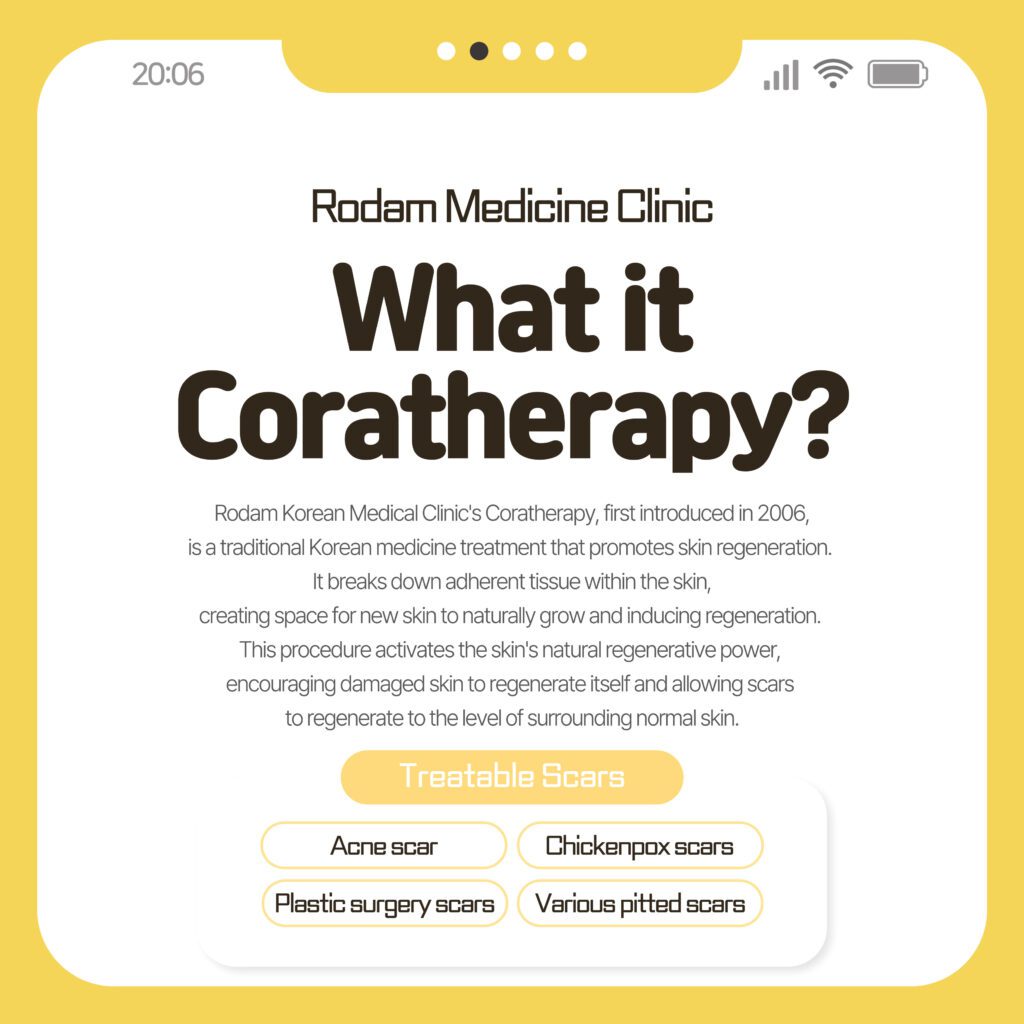
The key difference is that subcision is a treatment that cuts and lifts, while Coratherapy creates space to be filled with new tissue.
During the Coratherapy process, some subcision effects may occur, but they are merely secondary effects.
The Coratherapy treatment process involves disinfection → application of anesthetic cream → designing the scar area three-dimensionally and forming space with the needle.
It induces the regeneration of collagen and elastin, leading to the creation of new tissue.
Rather than simply cutting, the key is to create an environment where the skin can regenerate itself.
The advantage of Coratherapy is that it allows for three-dimensional treatment and customized treatment for various scar types.
Additionally, it uses the body’s natural healing power, resulting in fewer side effects.
It is applicable to all types of acne scars, including ice pick, boxcar, rolling, and mixed scars.
Rodam Korean Medicine Clinic has been performing Coratherapy since 2006.
Coratherapy uses specially designed needles to break adhesions and stimulate the dermis layer to encourage the filling of regenerative substances, making it an effective treatment for depressed scars.
In particular, it uses an L-shaped incision needle rather than a simple straight needle,
allowing for delicate stimulation as if sculpting the scar.
As a result, the treatment progresses in a way that blends more naturally with the surrounding normal skin,
and since the dermis layer itself regenerates, the treated area does not sink back, which is another advantage.

Looking at the photos after the first treatment, you can clearly see the results.
This was a male in his late 20s with boxcar and rolling scars on his cheeks.
After 10 sessions, the depressed scars were noticeably lifted.
He adhered well to abstaining from alcohol and smoking and maintained consistent treatment intervals, which enhanced the results.
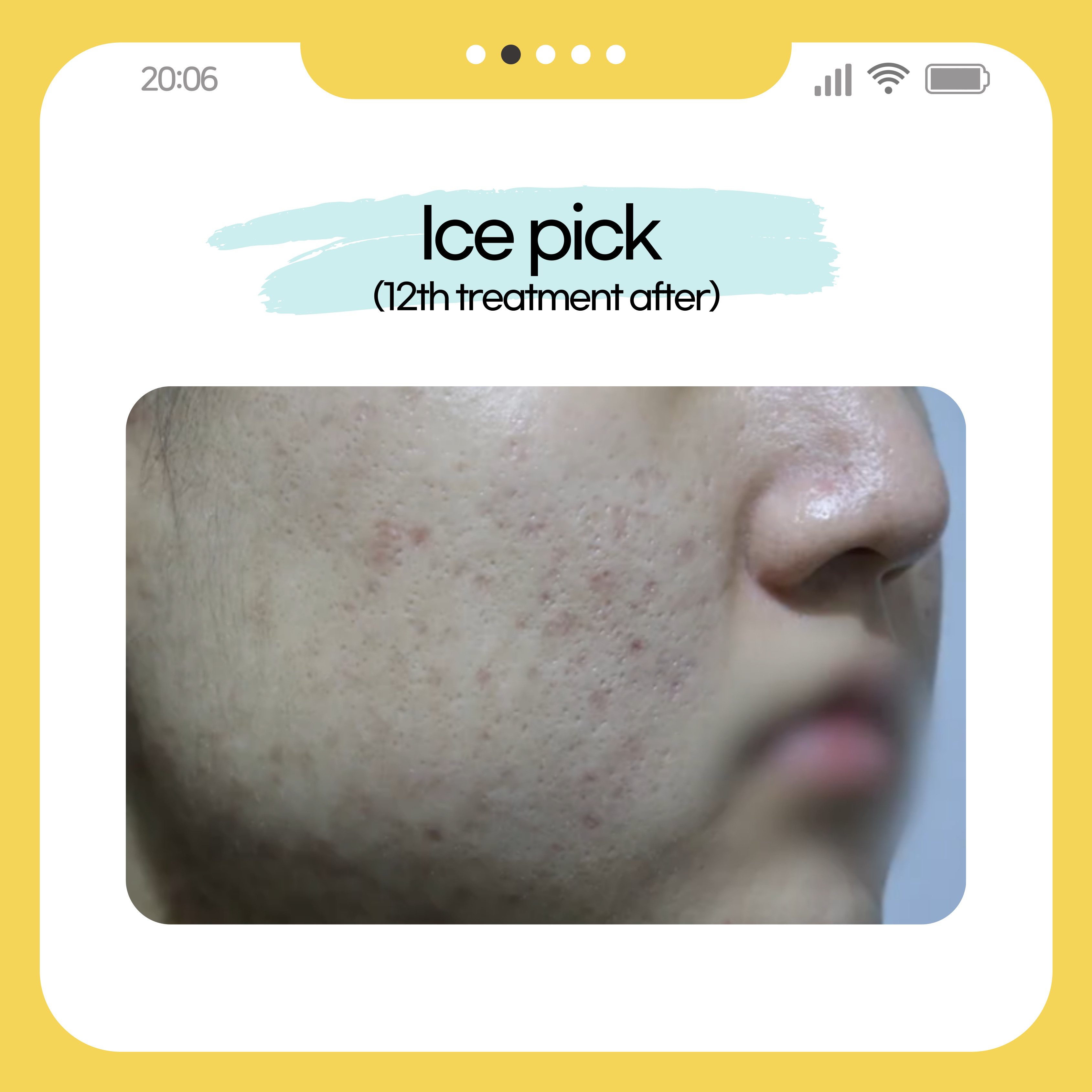
In the photos after the second treatment, this was a female in her early 30s with ice pick scars on her temples and cheeks.
She underwent a total of 12 sessions and reported noticeable improvement from the 6th session onward.
Ultimately, she experienced more than a 70% improvement.
She initially visited us because laser treatments had minimal effect, but she described Coratherapy as feeling like the inside was being filled.
Coratherapy has varying levels of pain depending on the area.
The cheeks and temples are relatively less painful, the forehead feels slightly prickly, and the nose area is the most painful.
Many patients find it less painful than Fraxel laser treatments, and some describe it as similar to the pain of extraction.

To summarize, subcision is a treatment that cuts and lifts, while Coratherapy creates space to be filled with new tissue.
Coratherapy is a more three-dimensional and fundamental scar treatment.
Scar treatment can take a minimum of 3–6 months and up to a year or more.
As mentioned, acne scars can be significantly improved,
and Coratherapy has proven to be a very effective treatment method in this process.
However, Coratherapy requires the delicate skills and experience of a Doctor to achieve the desired results,
so it is crucial to receive treatment from a skilled practitioner.
Rodam Korean Medicine Clinic has focused on treating depressed scars for the past 20 years,
and we sincerely listen to your skin concerns.
We will continue to be by your side for your scar treatment. Thank you.