
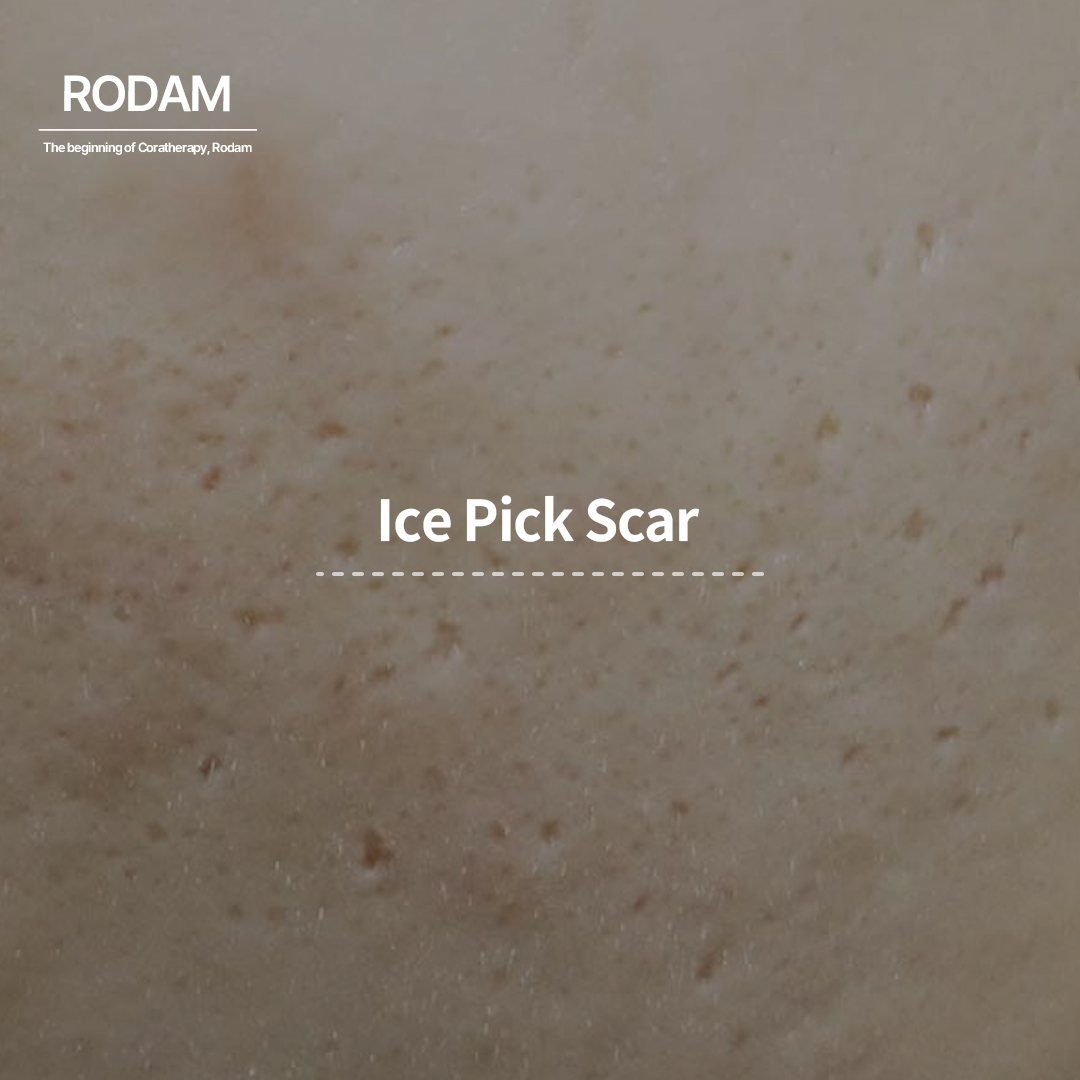
Causes and Treatment of Ice Pick Scars at Rodam Korean Medicine Clinic Coratherapy
Hello, this is Rodam Korean Medicine Clinic, the beginning of Coratherapy for scar removal.
Acne is not just a skin concern limited to adolescence but a common issue even in adulthood.
Especially when inflammation recurs or is not properly managed, it can leave deep marks on the skin, known as acne scars.
These scars can make the skin texture uneven and appear more prominent under light, affecting not only appearance but also confidence, causing concern for many people.
Acne scars can be categorized into three main types.
Boxcar scars with distinct edges, rolling scars that make the skin look bumpy and more noticeable under light,
and ice pick scars that appear as deep, narrow indentations like they were made with an ice pick.
Today, we will focus on the most challenging type, ice pick scars.
We will explain the causes and treatment methods for ice pick scars in detail,
and we hope this article helps alleviate your concerns about scars.
What are Ice Pick Scars? Definition and Causes of Ice Pick Scars
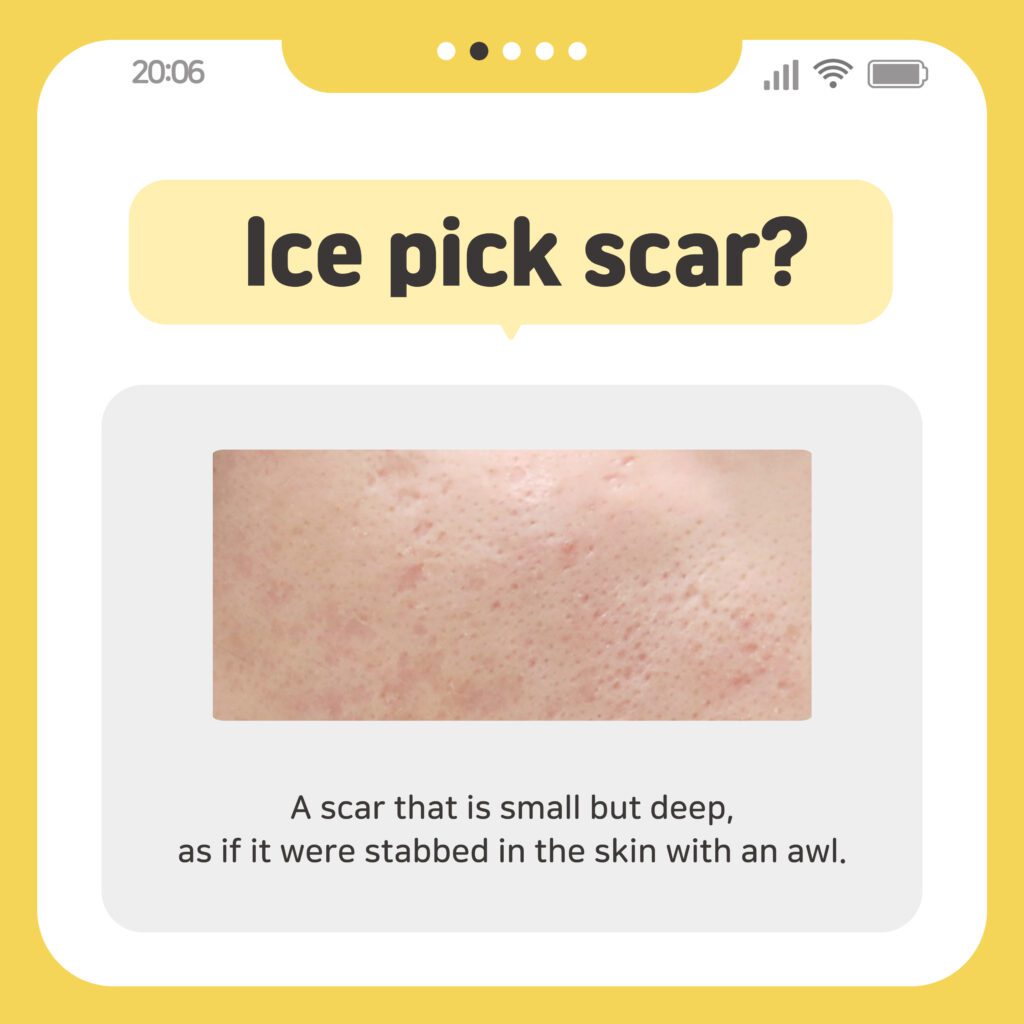
Ice pick scars are a type of acne scar that are the deepest and narrowest in shape,
characterized by a skin indentation resembling a puncture from an ice pick.
The openings are narrow, but the base is deeply sunken, making natural healing nearly impossible, which is why many people struggle with them.
Ice pick scars are the deepest and narrowest type of acne scars,
mainly occurring when inflammation penetrates vertically and deeply along the pores.
Damage is concentrated deep within the dermis layer rather than the skin surface,
preventing normal regeneration.
Insufficient collagen fills the damaged area, leaving behind scars that appear as if punctured by an ice pick.
They are more likely to appear on areas with thin skin or large pores,
and attempting to squeeze or repeatedly irritate acne can worsen the damage, solidifying it into an ice pick scar.
In conclusion, ice pick scars are not merely the result of inflammatory acne,
but a complex interaction of inflammation depth and direction, skin structural characteristics, and regeneration failure,
making them the most challenging type of scar to treat.
Although ice pick scars involve accumulated damage deep within the skin,
making them the most difficult to treat compared to other scars, they are not impossible to improve.
With the right treatment methods, even deep ice pick scars can be sufficiently treated.
So, what treatment methods are effective?
Treatment for Ice Pick Scars
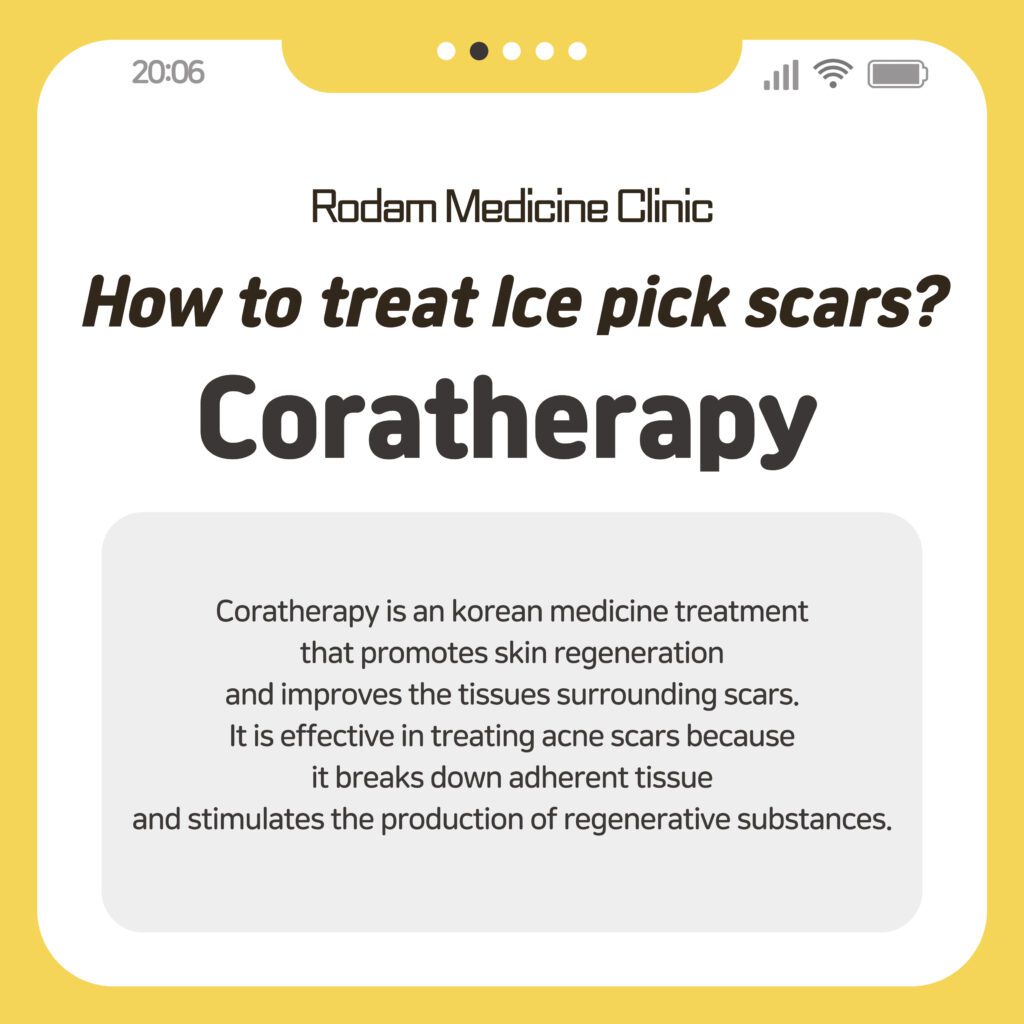
Ice pick scars are challenging to treat with conventional methods due to the damage extending deep into the dermis layer.
In such cases, Coratherapy is gaining attention as an effective solution.
Coratherapy uses specially designed needles to directly release damaged tissues
and create an environment where the skin can heal itself.
This process stimulates the regeneration of collagen and elastic fibers, gradually filling in the sunken scars,
and alleviates the abnormal adhesion between the epidermis and dermis.
Most importantly, as it utilizes the skin’s natural healing ability, the risk of side effects is low,
and long-term improvement can be expected, making it particularly effective for treating ice pick scars.
Compared to other procedures, the advantages of Coratherapy are more pronounced.
Laser treatments involve removing the skin surface to induce regeneration,
but they can be highly irritating to the skin and may have limited effects in cases of weak recovery ability.
Fillers provide immediate improvement by filling the indented areas with substances,
but they are temporary and require repeated procedures.
On the other hand, Coratherapy stimulates deep within the skin to induce fundamental regeneration, offering long-term improvement.
As the treatment progresses through the skin’s natural healing power, it is considered safer.
Ultimately, Coratherapy is not just about masking symptoms but is a fundamental solution that encourages the skin to regenerate new tissue, setting it apart from other procedures.
Before and After Ice Pick Scar Treatment
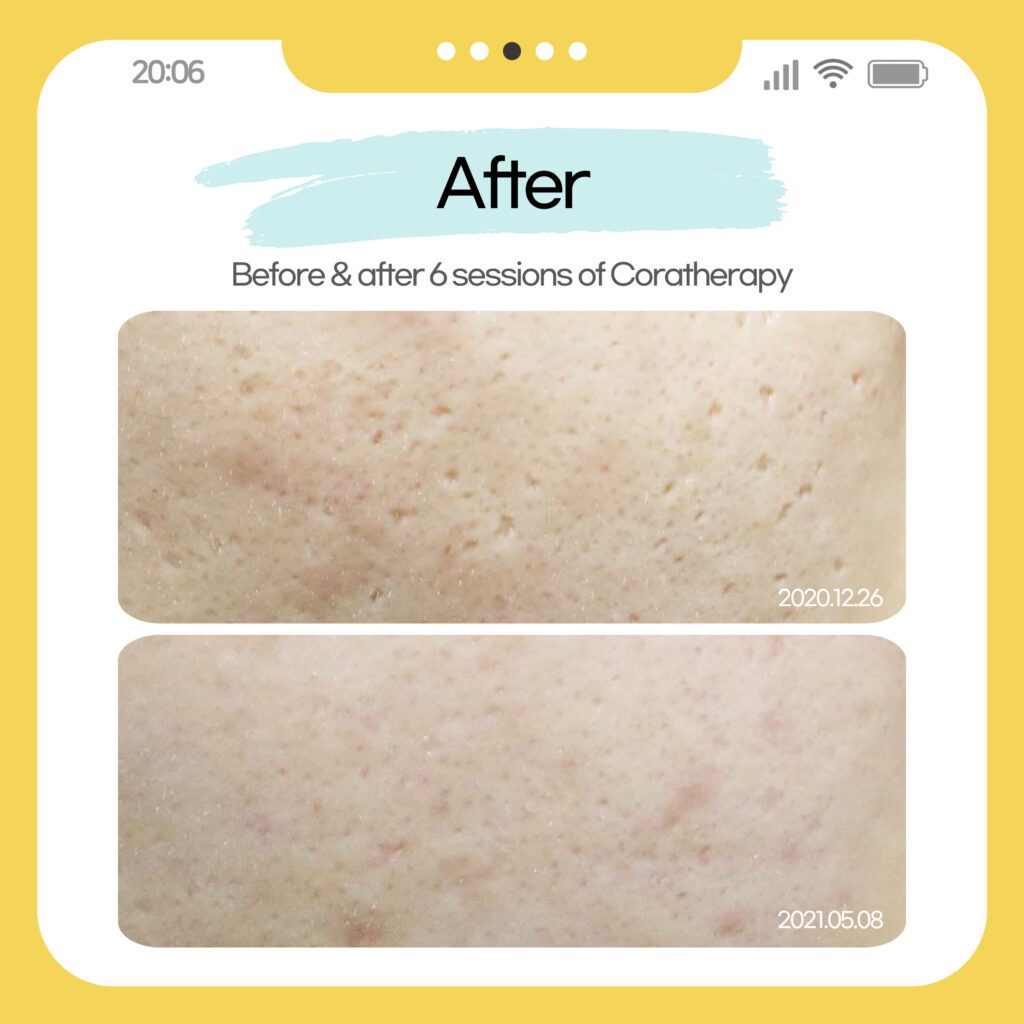
Case :: Ice pick scars on both cheeks
History :: No prior treatment experience
Report :: 6 sessions of Coratherapy
As seen in the post-treatment photos, the improvement is remarkable.
Particularly, the deep ice pick scars on both cheeks showed noticeable recovery after just six sessions,
with the shadowing effect caused by the depth of the scars disappearing.
The skin tone became more even, and the texture transformed into a smoother appearance.
As discussed, ice pick scars are the most challenging type of scar,
but they can be sufficiently improved through Coratherapy, as demonstrated by real cases.
However, as Coratherapy requires precise access to the deep layers of the skin,
the experience and skill of the Doctor are crucial to achieving the desired results.
Therefore, it is essential to receive treatment from a skilled Doctor.
Rodam Korean Medicine Clinic has been focusing on treating indented scars for the past 20 years,
and with the experience and expertise accumulated over the years, we have helped many people resolve their concerns about scars.
We will continue to be by your side for your scar treatment needs.
If you have any further questions, please feel free to contact us. Thank you.